
| EDF Newsletter 2026
The 29th EDF Annual Meeting took place on January 22-24, 2026, in Montreux as face-to-face meeting. The meeting was a great success, with fruitful social interaction and an outstanding scientific program. We thank all collaborators, speakers, societies, corporate partners and guests for their valuable contributions. The EDF was pleased to welcome the following new members who were accepted during the General Assembly of the January 2026
EDF Annual Meeting:
Michael Ardern-Jones, UK
Evangelia Papadavid, Greece
Asja Prohic, Bosnia and Herzegovina
Simone Ribero, Italy
Enikö Sonkoly, Sweden
Marina Venturini, Italy
Christian Vestergaard, Denmark
This EDF Newsletter aims to keep you updated about our ongoing and upcoming activities of the EDF, including preparations for the next EDF Annual Meeting in 2027, planned as a face-to-face event in Montreux on January 21-23, 2027 (please see below).
By involving key opinion leaders and Professors from all over Europe, the EDF aims to strengthen the position of dermato-venereology and to improve healthcare for patients across the continent. To achieve these goals, and with your support, we will keep interacting with industry, academia, government, patients’ organizations, and the society.
EDF BOARD OF DIRECTORS 2026
Prof. Alexander Navarini, Basel, Switzerland, President
Prof. Michael Schön, Göttingen, Germany, Past President
Prof. Miklós Sárdy, Budapest, Hungary, Secretary General
Prof. Kaisa Tasanen-Määttä, Oulu, Finland, Treasurer
Prof. Antonio Costanzo, Milan, Italy
Prof. Charlotta Enerbäck, Linkoping, Sweden
Prof. Alexander Enk, Heidelberg, Germany
Prof. Ana-Maria Forsea, Bucharest, Romania
Prof. Josep Malvehy, Barcelona, Spain
Prof. Nick Reynolds, Newcastle, UK
Prof. Marie-Aleth Richard, Marseille, France
Prof. Alexander Stratigos, Athens, Greece
| EDF ANNUAL MEETING 2027
The 30th EDF Annual Meeting takes place on January 21-23, 2027, as a face-to-face meeting in the Hotel Suisse Majestic in Montreux, Switzerland. The program starts with our traditional plenary guest lectures. This year Prof. Agnes Klar from the University Children’s Hospital Zurich, will speak about “3D-printed human skin substitutes: From robotic ‘SkinFactory’ to real patients”, followed by a lecture on “war dermatology: Skin disease, trauma and public health challenges in conflict settings” presented by Dr. Valeska Padovese from the Genitourinary Clinic, Mater Dei Hospital, Malta. Further plenary lectures will follow on Friday afternoon with Dr. Roberta Vasconcelos-Berg (University Hospital Basel – Margarethenklinik) and Prof. Alex Miras (Ulster University, Belfast) on the joint topic From amazing health benefits to “Ozempic face” and beyond: The truth about GLP-1 agonists from skin to metabolism” and Prof. Tamar Nijsten, Erasmus MC Rotterdam, focusing on “longevity dermatology: Skin aging, regeneration and the future of human appearance”.
Two well-established highlights will be our interactive forums. The first interactive forum on “TEACHING”, chaired by Prof. Kaisa Tasanen-Määttä and Prof. Alexander Stratigos, will include Prof. Aimilios Lallas discussing “how to teach clinical dermoscopy in 2027: Structure, patterns, pitfalls”, Prof. Art Papier who will look into “from Atlases to AI and Augmented Intelligence: How will we teach and practice dermatology in 2030”, Prof. Michael Geiges talking about “from moulages to multimedia: How dermatology teaching has transformed over a century”, and Prof. Cord Sunderkötter providing a talk on “teaching classical dermatology: Foundations, occlusion, Unna boot and topical therapy”. The second interactive forum, chaired by Prof. Charlotta Enerbäck and Prof. Ana-Maria Forsea, will be focusing on a variety of topics – “MIXED BAG”. Prof. Enno Schmidt will speak about “precision autoantibody profiling in autoimmune blistering diseases”, Prof. John Common will discuss “skin microbiome diagnostics: Clinical relevance in inflammatory skin disease”, and Prof. Markus Vincent Starink will focus his topic on “The diagnostic hot seat: When common diseases behave strangely”.
Additional talks in this session will include “your much-needed update in genodermatoses: What every senior dermatologist should know in 2027” discussed by Prof. Cristina Has, “digital pathology: From glass to insight” presented by Dr. László Fónyad, and “plastic surgery: Lymphatic Reconstructive surgery in primary and secondary lymphedema” presented by Prof. Nicole Lindenblatt.
The program will be complemented by industry symposia and updates from the commissions groups, and concluded with a keynote lecture by Prof. Günter Burg on the occasion of the EDF’s 30th anniversary.
We can certainly look forward to interesting and interactive discussions on these stimulating topics.
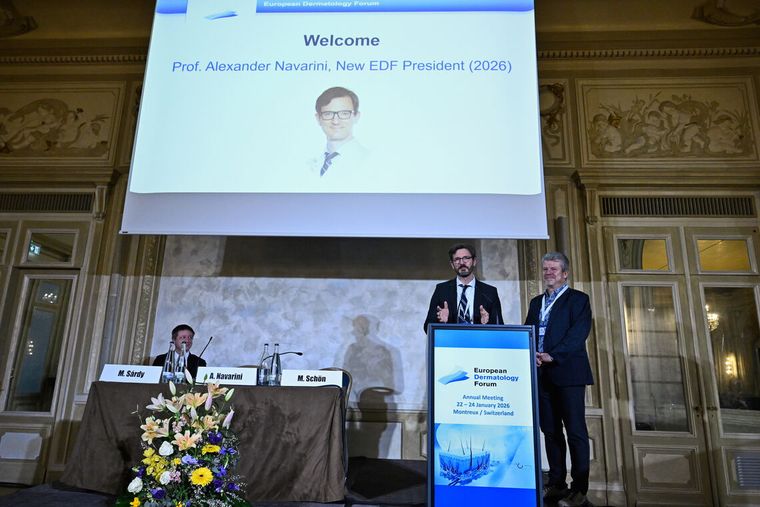
Prof. Miklós Sárdy, Prof. Alexander Navarini and Prof. Michael Schön at the EDF Annual Meeting 2026
| EDF EURODERM EXCELLENCE
Since 2003, the EDF has been organizing the Euroderm Excellence course for residents in dermato-venereology. The renowned course is designed to promote and enhance the highest educational training for 4-year dermatology residents from across Europe. The EDF Euroderm Excellence is a unique course for dermatology residents at a European level with outstanding speakers and opinion leaders in the field of dermatology and venereology.
After the successful conduct of the EDF Euroderm Excellence 2025 with the title “dermatology of tomorrow”, which was organized in Rome on November 18-21, 2025, we intend to host the 23rd EDF Euroderm Excellence live course back in Rome on November 17-20, 2026. This year’s course will focus on the “the future in dermatology”. Out of more than 250 applicants each year, the 100 most promising European dermatology residents are selected at the end of July. We are grateful for the precious support from our sponsors Lilly* and LEO Pharma*. For more information, kindly visit the course website: www.eurodermexcellence.com
*This program is supported by independent sponsorships from industry sponsors. The sponsors have no influence on the content, speaker selection, or scientific program.
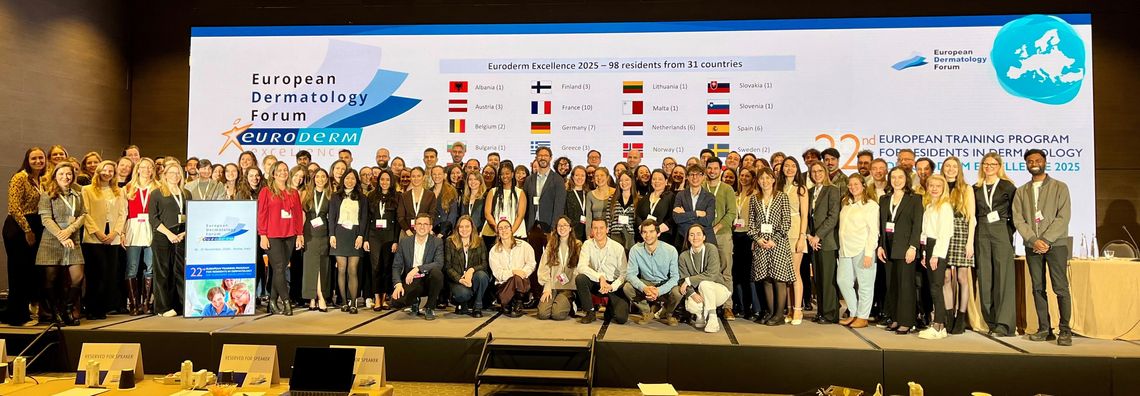
Participants of the EDF Euroderm Excellence course 2024
| EDF EUROPEAN GUIDELINES
Since establishing the EuroGuiDerm Program in 2018, the EDF has continued to support the development of methodologically robust, clinically relevant, and practical European dermatology guidelines. Based on systematic evidence reviews, transparent consensus processes, and internationally accepted methodological standards, the program focuses on diseases with high clinical need and rapidly evolving therapeutic landscapes.
Over the past year, guideline activities have focused on maintaining and updating key guidelines in inflammatory and immune-mediated skin diseases. The European psoriasis guideline is being updated through targeted revisions of priority topics identified by EDF members, with the current focus on recommendations for latent tuberculosis screening and management in patients receiving systemic psoriasis treatment. Future updates will address systemic therapies and the management of psoriasis in patients with current or previous malignancy.
The EuroGuiDerm atopic eczema guideline continues as a living guideline, enabling the rapid incorporation of new evidence and therapies. Planned developments include the integration of a treat-to-target framework with defined treatment goals and switching criteria.
A major achievement was the publication of the updated international urticaria guideline, providing harmonized recommendations for the diagnosis and management of acute and chronic urticaria.
In addition, the updated EuroGuiDerm acne guideline has been updated and published addressing key practice-relevant topics, including isotretinoin, systemic antibiotics, hormonal therapies, and new topical treatments.
EDF European guideline activities will continue to focus on maintaining high methodological standards, providing timely updates, and supporting guideline implementation across Europe.
OUTLOOK 2027
During its June Board meeting, the EDF Board of Directors determines which guideline projects to prioritize for the upcoming year, taking into account their urgency and relevance to the European dermatological community.
For 2027, the EDF plans to provide financial support (grants) for selected guideline projects and invites European guideline groups working on vitiligo and alopecia areata to submit their proposals.
Guideline groups are invited to submit their grant applications via the EDF website:
| EDF CONTRIBUTOR PROGRAM
EDF Contributor Program – Help Shape the Future of European Dermatology
The European Dermatology Forum invites EDF members and Euroderm Excellence alumni to contribute to European dermatology education and clinical knowledge - on their own terms and at their own pace.
The new EDF Contributor Program offers three flexible formats:
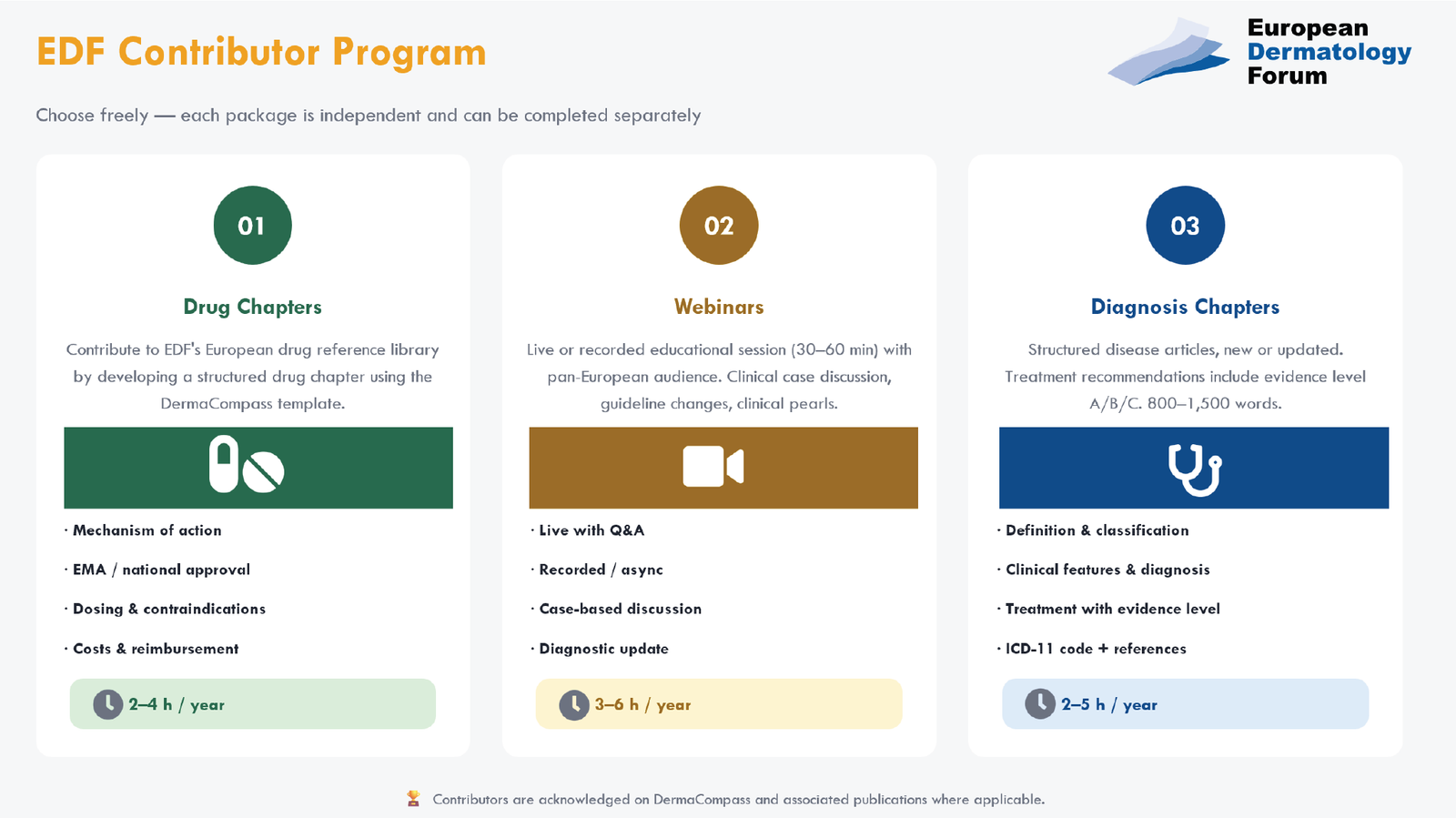
All contributions are reviewed by EDF experts and published on DermaCompass (www.dermacompass.net/en/), the EDF’s growing European dermatology knowledge platform.
Why contribute?
Share your national expertise and clinical experience, gain visibility as an EDF contributor, and help build a pan-European standard for dermatology education.
The program is open to EDF members and Euroderm Excellence alumni. Contributor packages and further details will be presented at the upcoming EDF Annual Meeting in January and during the Euroderm Excellence course in November.
For any enquiries, please contact the EDF Office: nadine-estelle.abea@usz.ch.
| EDF PHYSICIAN SCIENTIST FELLOWSHIP PROGRAM
As of next year, EDF will introduce a new Physician Scientist Fellowship Program across Europe in collaboration with Prof. Michel Gilliet, CHUV Lausanne, and the Skin Science Foundation (SSF).
This program aims to equip physician scientists with cutting-edge techniques in translational research, new technologies, and Big Data Science through immersive training programs at specialized centers in Europe. 2-3 physician scientists will be able to complete a fellowship program (3-6 months) at translational research labs focusing on precision medicine to enhance knowledge exchange between labs across Europe in regard to methods for patient’s stratification. If you are interested to support this initiative as hosting center, please contact the EDF office (nadine-estelle.abea@usz.ch).

| DERMACOMPASS & EDF WEBINARS
DermaCompass is a digital dermatology assistant and clinical reference system designed mainly for healthcare professionals such as dermatologists and general practitioners to support diagnosis, differential diagnosis, investigation, and therapy planning for skin diseases.
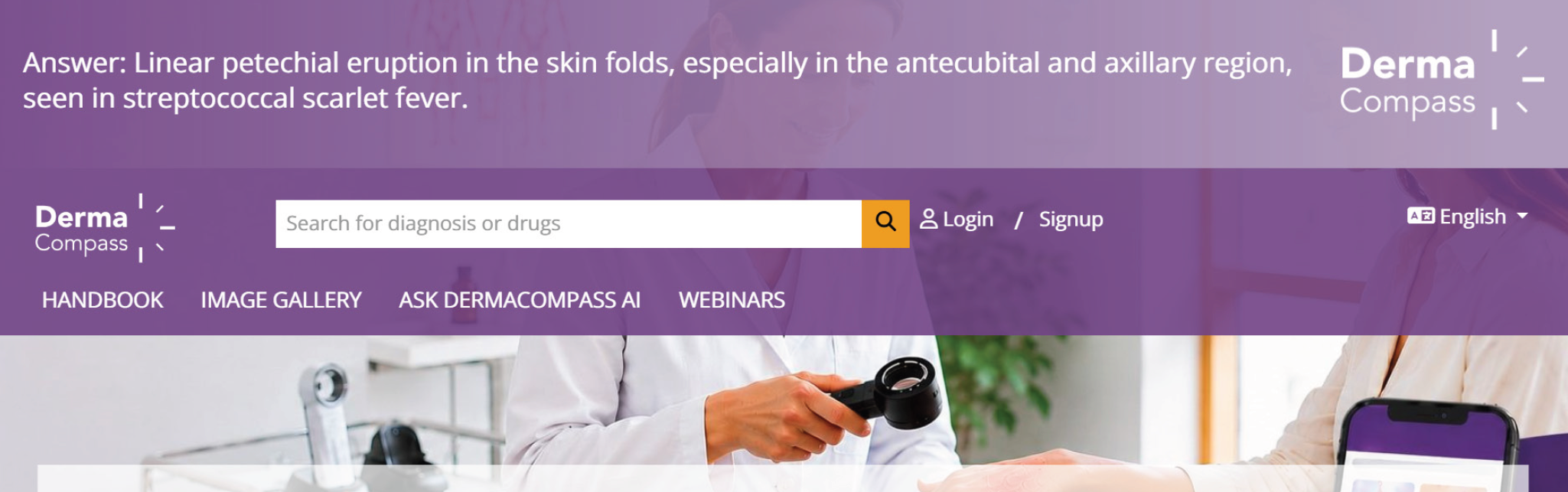
DermaCompass is available as both a web and mobile application, functioning as an interactive electronic textbook and diagnostic tool. In 2025, DermaCompass recorded 129’988 website visits, with the majority originating from Europe (111,354 visits; 85.7% of total traffic). DermaCompass has 2,758 registered users and more than 30 institutional accounts.
As of this year, the Euroderm Excellence course materials and EDF webinars have been integrated into the DermaCompass platform to increase visibility and reinforce knowledge transfer across Europe.
EDUCATIONAL WEBINARS:
A new webinar series, “Young Researchers and Skin Science”, has been introduced by the EDF President, Prof. Alexander Navarini, and Vahid Djamei. The aim is to join forces with other societies, such as ESDR and EADV, to conduct webinars with young researchers and clinicians to discuss challenges and opportunities in their working environment.
The first webinar took place on June 11, 2026, together with ESDR (Prof. Neil Rajan) on the topic “Why Are Clinician–Scientist Partnerships Important?”.
The next webinar is scheduled for December 17, 2026, with EADV on the topic “Mentorships”. Prof. Marie-Aleth Richard and Prof. Nick Reynolds will be moderating this webinar and will each invite one person from their own or other departments to join the webinar.
SCIENTIFIC WEBINARS:
EDF plans to offer at least two scientific webinars each year, supported by independent industry contributions; however, industry partners will have no influence on the webinar content or speaker selection.
The first webinar, supported by Lilly, took place on June 29, 2026, discussing the topic “From Skin Deep to Systemic: The Real Effects of GLP-1 Agonists.”
For more information and submission details, please visit our website:
| ERASMUS
The Erasmus+ Strategic Partnership project entitled “Harmonized European Dermato-Venereology Undergraduate blended LEARNing Implementation and Training” led by Professors Harald Gollnick, Gunter Burg and Martine Bagot, was successfully completed at the end of 2021. The 3rd edition of the Webbook was published in March 2026 within the Cyberderm platform, where it is now integrated into a single experience alongside the Cyberderm content rather than provided as a separate PDF. It includes:
Diagnostic algorithms (either created by authors or linked/referenced to the current guidelines).
Updates to the current chapters with the focus on epidemiology, pathogenesis, classification, diagnosis methods, therapies, and references.
We would also encourage other EDF members with an interest in undergraduate education to actively participate in this project. Please send an e-mail to info@hedulearnit.org.

| CYBERDERM
To maintain and promote high-quality education and training, the EDF successfully supports Cyberderm (Dermatology Online with Interactive Technology), an undergraduate online teaching
program with more than 20’000 active users worldwide. Cyberderm was developed by Prof. Günter Burg and is perated by Prof. Alexander Navarini and Vahid Djamei.
Cyberderm provides medical students with a comprehensive, image-rich learning experience in dermatology and enereology. The platform covers more than 120 key skin disorders and includes over 3’000 clinical images, reflecting a broad range of presentations across white and pigmented skin.
It supports a step-by-step approach to recognising and escribing dermatological findings and helps learners build confidence in clinical pattern recognition. Cyberderm is vailable online and as a mobile app for iOS and Android, and is completely free for learners and EDF members.
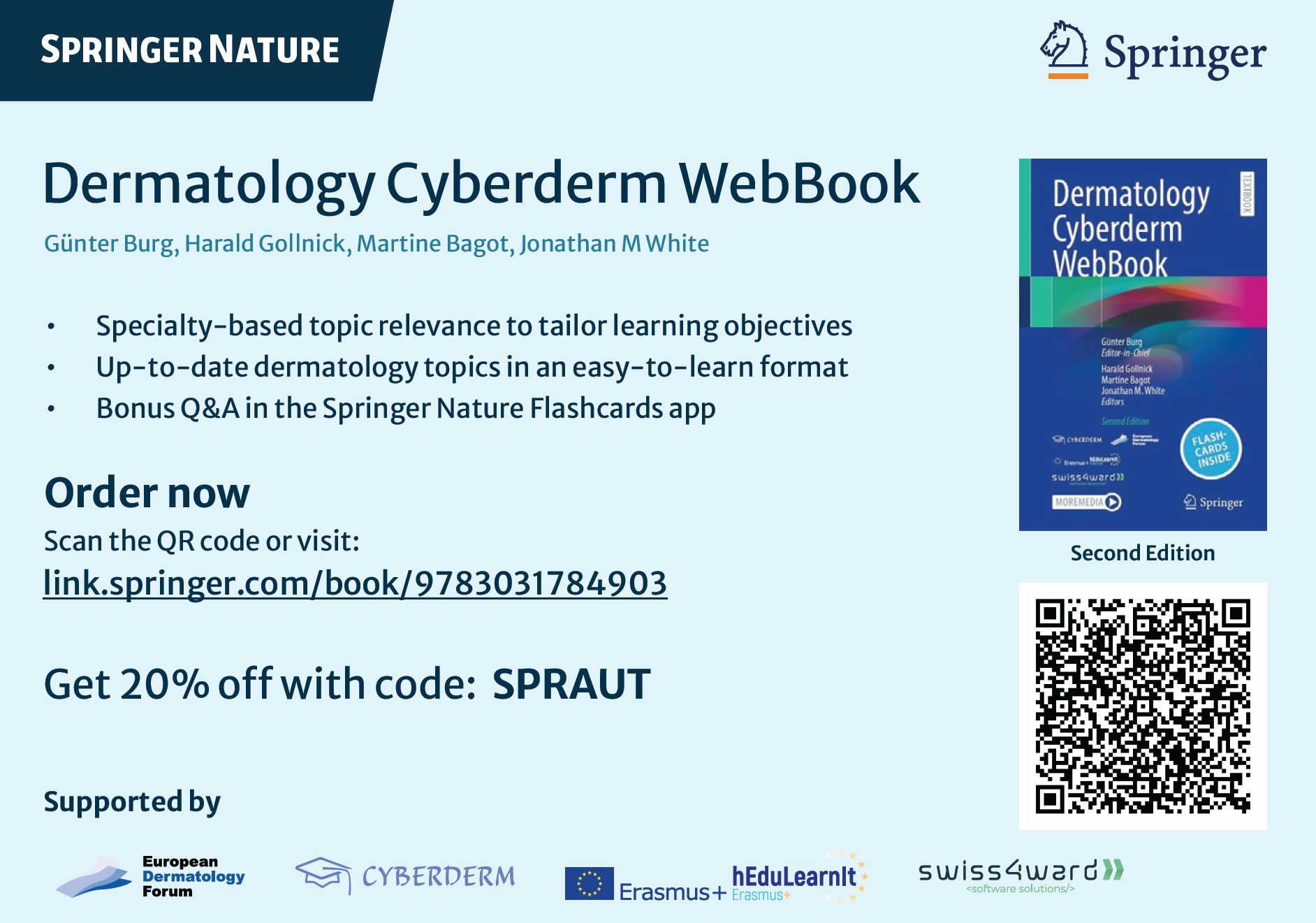
New on Cyberderm: “Ask Cyberderm” – the Cyber AI Dermatology Assistant
We are pleased to announce the launch of Cyber AI, now implemented on the Cyberderm platform as “Ask Cyberderm”. This new AI-based dermatology assistant supports medical students, dermatology trainees and healthcare professionals in their learning journey. Users can ask dermatology-related
questions, receive explanations of key concepts and get support while navigating Cyberderm’s educational content. With the integration of Cyber AI, Cyberderm further strengthens its role as an innovative digital learning platform for dermatology education. The assistant is available through the main navigation under “Ask Cyberderm” and offers an intuitive chat interface for interactive learning. Cyber AI is intended as an educational support tool and does not replace clinical judgement or professional medical advice.
| GÜNTER BURG EDF AWARD FOR EDUCATIONAL INNOVATION
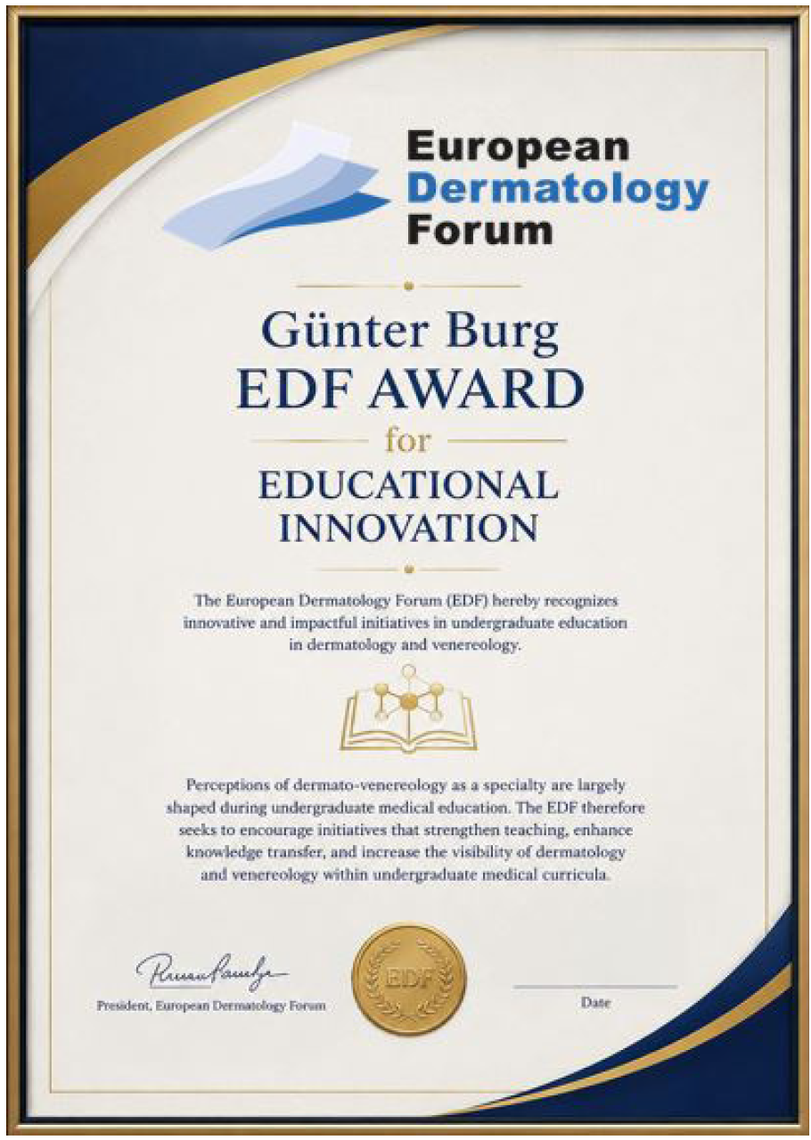
The European Dermatology Forum (EDF) announces the “Günter Burg EDF Award for Educational Innovation”, recognizing innovative and impactful initiatives in undergraduate education in dermatology and venereology.
Perceptions of dermatology and venereology as a specialty are often shaped during medical school. Through this award, the EDF seeks to encourage and celebrate initiatives that strengthen teaching, enhance knowledge transfer, and increase the visibility of dermatology and venereology within undergraduate medical education.
The award honors individuals, teams, or institutions whose educational innovations have made a meaningful contribution and difference to student learning and engagement, helping to inspire the next generation of dermatologists and venereologists.
Submission deadline
31st October 2026
For more information and submission details, please visit our website:
| GENESKIN
Geneskin is a comprehensive online database and website dedicated to rare genetic diseases of the skin (genodermatoses). This platform is designed to enhance the diagnosis, treatment, and management of these conditions by providing cutting-edge information to patients, their families, and healthcare professionals.
Currently, Geneskin offers in-depth knowledge on a broad spectrum of rare genetic skin disorders, including Ectodermal Dysplasias, Connective Tissue Diseases, Epithelial Adhesion Disorders, and DNA Repair Disorders.
Main efforts in 2026 will focus on the further development of Geneskin as a comprehensive European knowledge platform for genodermatoses. Planned activities include the expansion and modernization of the patient section with plain-language disease information, genetics and inheritance explainers, added infographics, and FAQs (e.g. “What does genetic testing mean?” and “What does heredity mean for my family?”). Disease cards will be further standardized and updated, with expanded management recommendations, improved information on specialized expert centers and clinical trials. To ensure credibility, the sites will be revised to include editors as well as direct linkage of disease pages to relevant ERN-Skin thematic groups, guidelines, and expert resources.
Overseen by a European Dermatology Forum (EDF) steering committee led by Prof. Johann Bauer, the website is regularly updated to reflect the latest research and treatment advances. Explore more: www.geneskin.org.
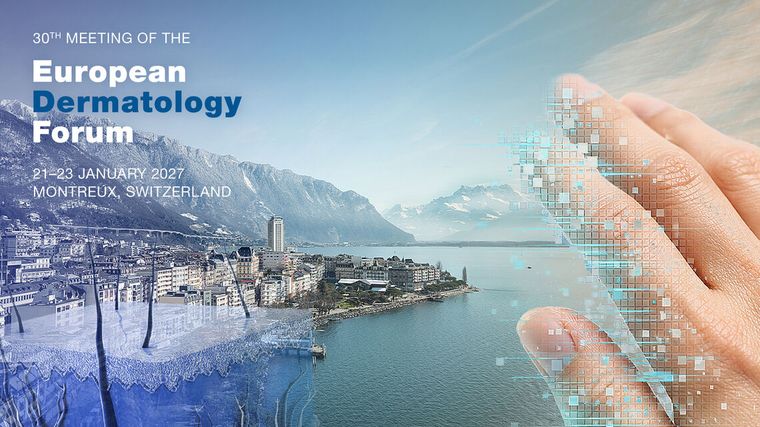
We look forward to spending another great and interactive EDF Annual Meeting with our members, collaborators, speakers, guests and corporate partners on January 21-23, 2027, in Montreux.
Warm regards,

Prof. Miklós Sárdy
EDF Secretary General
CORPORATE PARTNERS
The EDF enjoys a strong collaborative partnership with Corporate Partners from the pharma and biotech industry. We thank our Corporate Partners for their ongoing support of our activities.
This website uses cookies!

We use cookies to tailor our content to your needs and continuously improve our website. You can decide which cookies you want to allow. Detailed information about the cookies we use can be found in our Privacy Policy and Cookie Settings. You can withdraw your consent at any time.